Developed within a speculative ecological futures studio, the project explored interventionist machines that support endangered species through synthetic ecologies. The workflow combined ecological research, generative AI and image-to-3D modelling as an active partner in sustaining natural systems.
Year
2025
Category
Speculative Ecological Architecture
Tools
Generative AI

Krillara Sanctum envisions a synthetic marine nursery system designed to sustain declining krill populations within increasingly unstable ocean environments. The project treats architecture as an active ecological infrastructure, one capable of cultivating food, creating protected habitats, and supporting the regeneration of marine ecosystems.
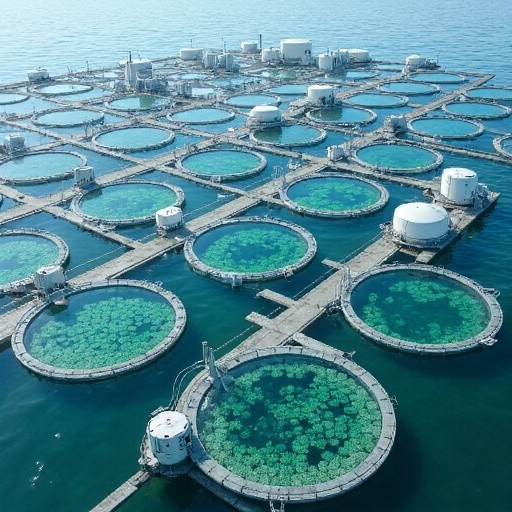
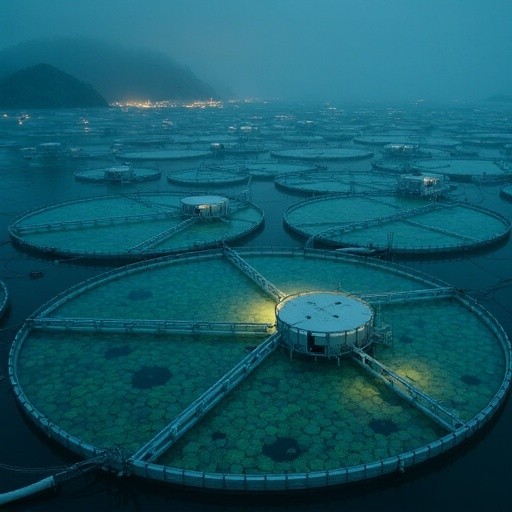
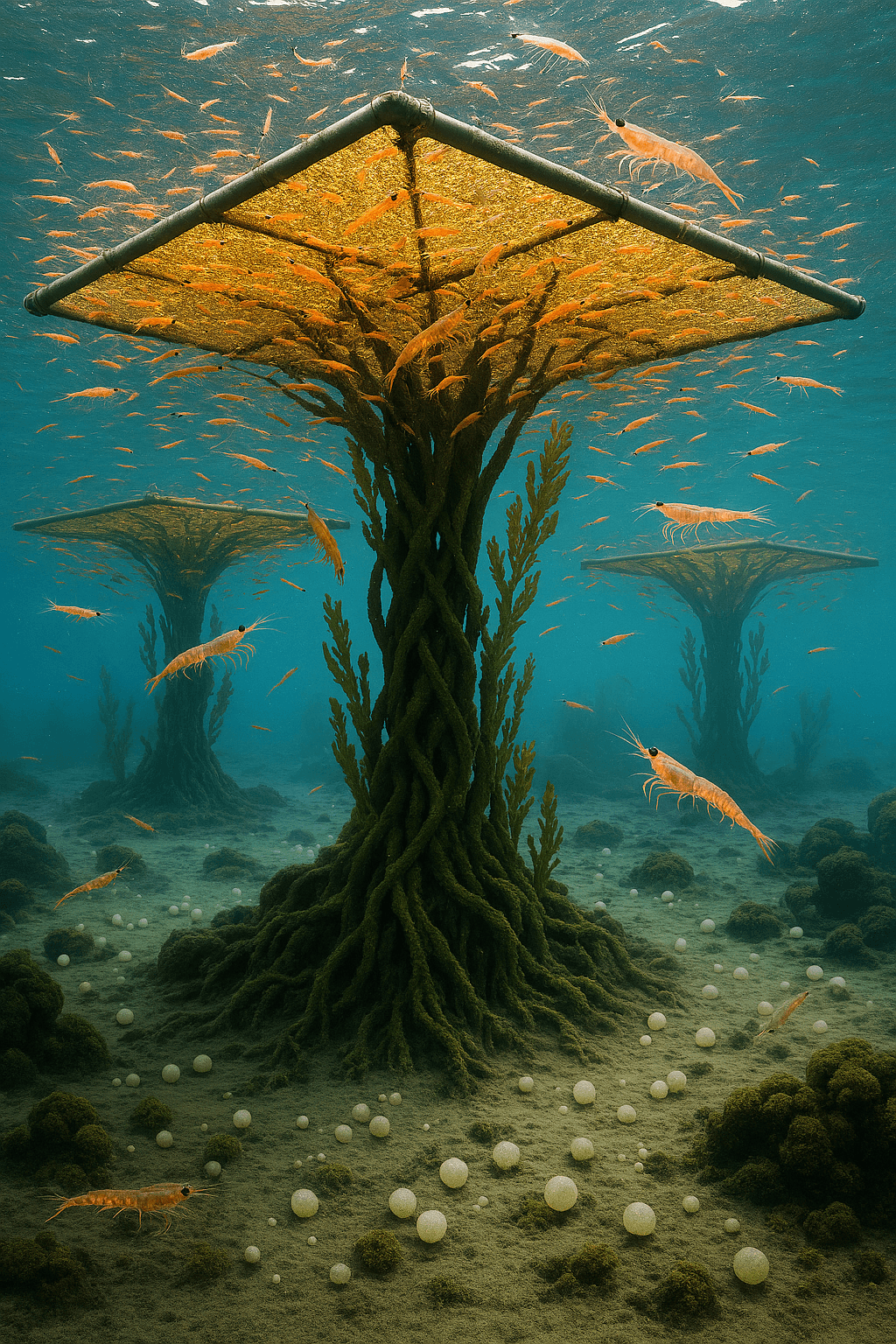
The system operates through three interconnected stages. First, phytoplankton foundation cultures are cultivated under controlled laboratory conditions. These cultures are transferred to surface tanks, where access to natural sunlight enables algae production to expand. The cultivated biomass is then circulated to submerged nursery structures that mimic the environmental qualities of natural krill habitats while providing a consistent supply of nutrient-rich food.

By linking laboratory cultivation, surface infrastructure, and underwater habitats, Krillara Sanctum establishes a continuous relationship between biotechnology and marine architecture. The project explores how interventionist machines can collaborate with living systems, not by replacing nature, but by strengthening its capacity to survive. Beyond supporting krill populations, the proposal contributes to food-chain resilience and examines broader applications in climate adaptation, sustainable aquaculture, ecological restoration, and carbon sequestration through enhanced marine productivity.